About Our Work
Presidential Transitions, FDR-Present
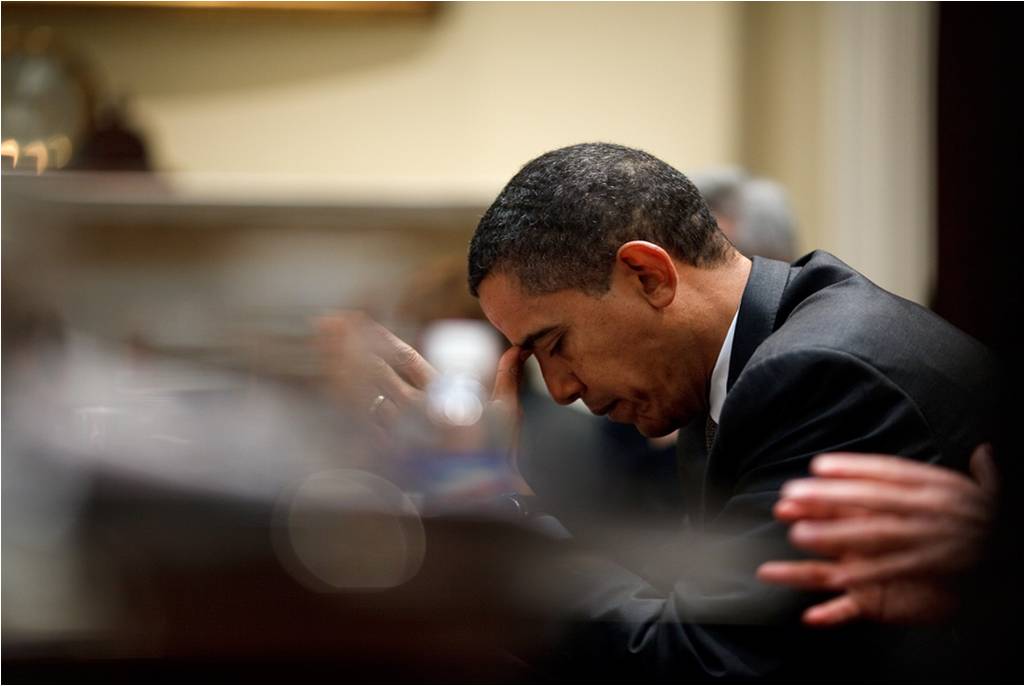 “There’s nothing that can completely prepare you for the job of being President… You know, that first day after…they walk you into the Oval Office, then everybody leaves, and you’re thinking, ‘Oh man, now what?!’
— President Barack Obama, 2016
A letter to the White House Transition Project:
“You were a big help to the Transition Coordinating Council and the overall transition effort both in 2001 and 2008. Thank you for taking the time to share your expertise.”
–- President George W. Bush, 2010
Since 1997, the White House Transition Project has provided non-partisan expertise in all phases of democratic transitions, from constitution-building in emerging democracies to regularized, statute driven transfers of power. This page previews those services, highlighting our White House office “briefs” compiled from hundreds of interviews with former White House staff about their preparations, work routines, mistakes, and successes.
Preparing for a Second Term
The 2025 transition will present the American public with an historic circumstance — two presidents campaigning, one of whom will assume his second term. Second terms offer a special opportunity to carry out a successful and peaceful transfer of power. While both will have exhausted elements of their previous agenda, both will be attended by some staff with previous experience in White House work, with its unique requirements and special pitfalls. Nevertheless, both will come to their second terms accompanied by a staff largely untested in the special circumstances of the global nerve center. Even those remaining former staff with some experience rarely come back to a White House to assume their old jobs, instead they reach out for positions for which they have had little first hand experience. And many of the critical White House jobs, regardless of president, will have brand new staff, those who have never worked in a White House or, coming from Congressional staffs, have never worked in the Executive — and often those who have never worked in Washington, at all.
WHTP’s Transition Resources
| WHTP provides a range of resources to campaigns, reporters, and scholars. Click on each for a preview. | Institutional Memory Studies – Briefs describing practices and routine for critical White House offices compiled from two decades of interviews with former presidential assistants from the Nixon presidency onward. Work Life Studies – General essays on what makes working in a White House special and so challenging for its staff, based on two decades of interviews with former presidential assistants from the Nixon presidency onward. Following the Transition – scholarly reports on the transition process as it proceeds. WHTP Public Events – Transcriptions of numerous WHTP public events. |
WHTP’s Institutional Memory Briefs
After interviewing hundreds of former White House aides, WHTP has built briefing books on 13 White House offices. These briefs summarize best and worst practices for those who have worked in these offices, office routines, work life, etc. Below, see a couple of examples and then…
see all of our briefs here.
OMB an Insider’s Guide
Life in OMB is not in the fast lane. Life in OMB is in the oncoming lane.
— Former Director OMB, Jim Miller
The joint product of 21 former senior OMB leaders, the WHTP briefing book on OMB offers a unique view on this critical executive agency and what it takes to run it. Many agree that the requirements for leadership at OMB are far different than what many in Washington expect — having experience in the congressional budget process, for example, is widely agreed upon as not one of them. Not unexpectedly, many in Washington simply don’t understand what it takes to lead at OMB and carry through on the President’s mission. To get your own copy of the guide, click here.
The Chief of Staff, in Brief
This synopsis summarizes the WHTP briefing book on the White House Chief of Staff, click here.
Office of the Chief of Staff, in full
In the end, every chief of staff is a servant of the president, and the more independence they ask for or try to carve out for themselves, the more likely they are to fail.
It once was possible to argue that the White House could be run without a chief of staff. Those days are gone. The complexity of the modern White House requires discipline and coordination that can only be achieved if there is a central coordinating point, someone other than the president to oversee the operation. If independence and authority are both the necessity of a White House and a recipe for failure, then how do White House Chiefs of Staff proceed. This new brief brings the wisdom of experience to bear on this question from the advice of those who have borne the responsibility. Click here for a copy.
Office of the Vice President
Once the epitome of a spare part, the Vice Presidency has become a central element of every administration’s successes or failures.
“Two brothers went off to make their fortunes. One went to sea and the other became Vice President. Neither was ever heard from again.” No other job in the American constitutional system has seen a greater transformation than the Office of the Vice President. This briefing book on the vice-president outlines the dimensions of that change and how to manage the opportunities and responsibilities of this newly defined position in the White House.
See all of briefs here.
Back to the top.
Useful Tools: WHTP’s White House Organization Charts
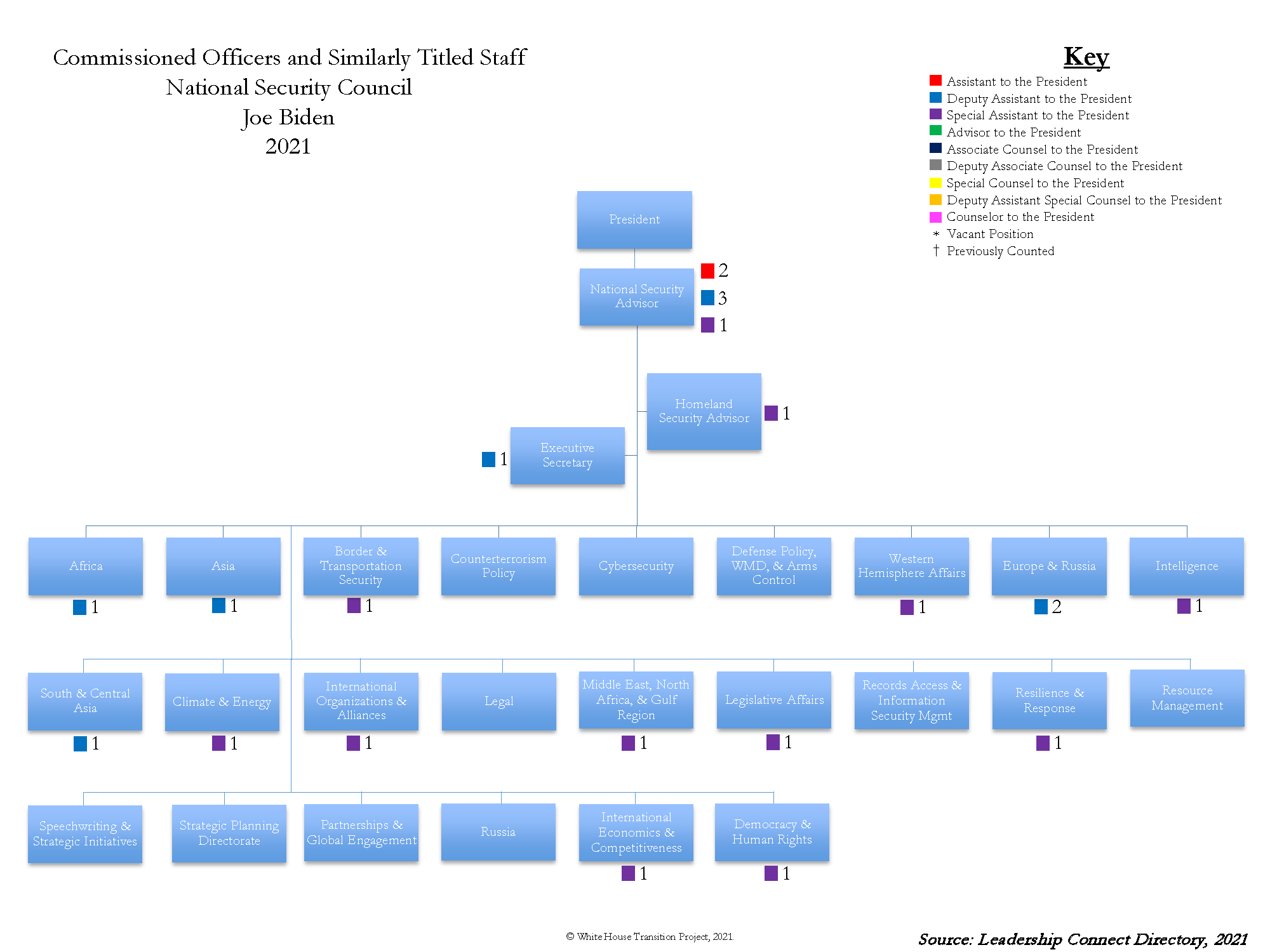 A part of its long standing program, the White House Transition Project compiles staffing patterns through its White House organization charts. Part of that exclusive series, the current document covers the initial organization of the Biden 2021 White House Office, the Vice President’s Office, the First Lady’s Office, and the NSC.
Click here for the full collection of organization charts for other administrations and other offices.
Back to the top.
Following Transitions
Back to the top.
This section of our website regularly publishes special and timely studies of the transition process, including those covering legal elements of the process, planning documents, along with studies of the transition in progress, with reports on topics for which WHTP has special scholarly expertise, e.g., appointments, press relations. Here are some examples:
Start Early, Go Big – inside the 2021 Biden Transition
“Wonderful storytelling and sharp analysis. Required reading for anyone interested in how to run a transition and build a presidency.”
— Paul C. Light, Goddard Professor of Public Service, NYU
WHTP Director Martha J. Kumar wrote this study of the 2021 Biden Transition. Click here for the full report in PDF and click here for the official version generously made possible by Wiley publications. The abstract:
The 2021 transition will be remembered as the most tumultuous in over a century. President Trump sought to delegitimize the presidential election as flawed and refused to concede his loss, and several of his departments and agencies slow-walked their cooperation with the incoming team. The insurrection on the Capitol and the Trump impeachment trial brought more turmoil. How, in such an environment, did Joseph R. Biden manage to complete the basic transition preparations needed to get off to the fast and effective start his administration had? A presidential transition has two dominant threads that come together to pave the path to a productive beginning. Early transition planning was aided by existing laws requiring the federal government to provide important elements to transition planning. Additionally, and somewhat unusually, Biden drew on people who had experience in government service.
Reports on the “Stand Up”
This report summarizes six measures of the Biden Administration’s progress in standing up the American Executive. It covers filling the government’s “stand-up critical” positions, the general pace of nominations and confirmations, the Agency by Agency stand up, a recurring monitor on gender, and a summary of the backlog of nominations and confirmations.
Back to the top.
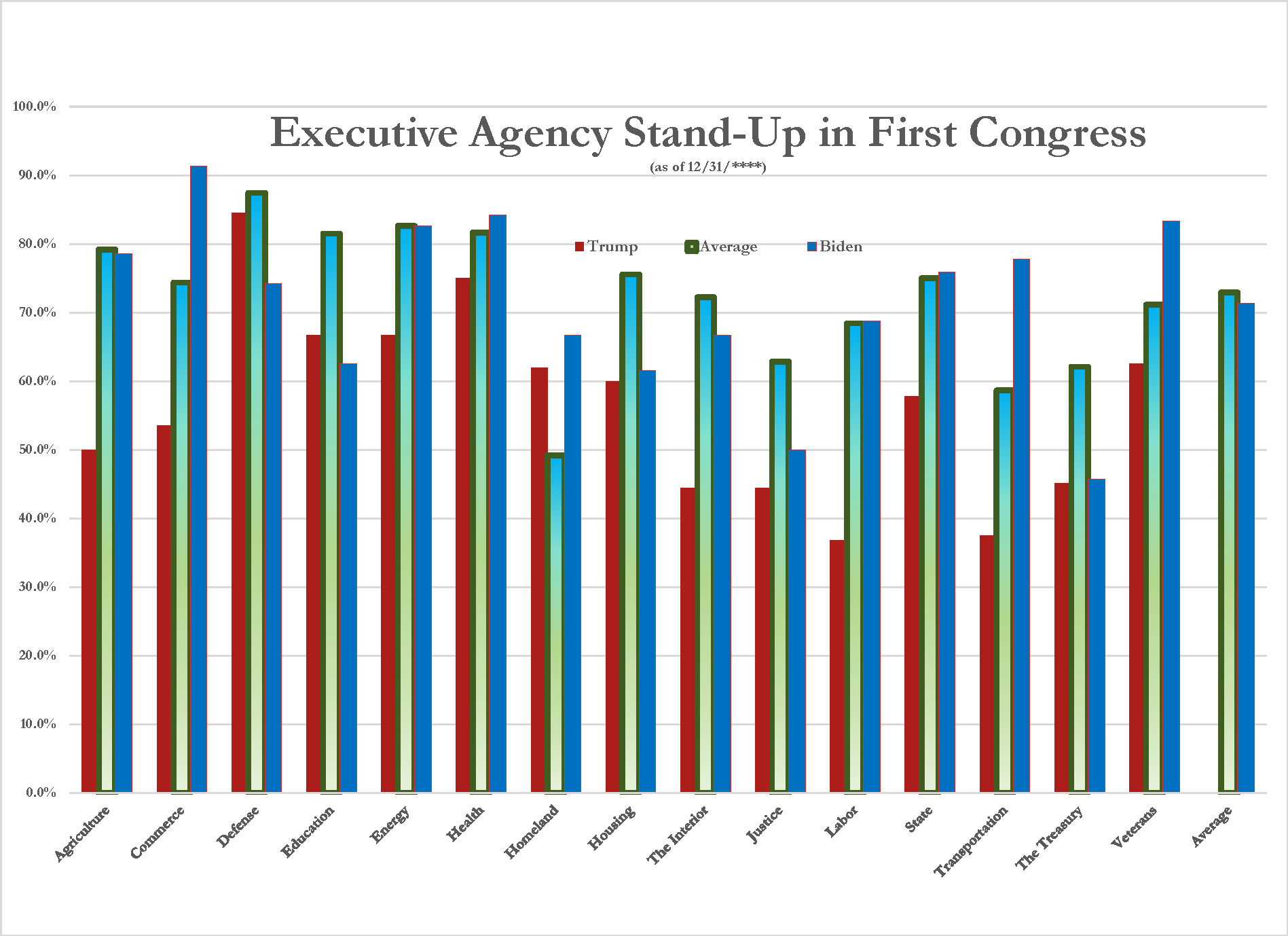 The Peril in Agency Standup at the end of a Congress – Agencies still staffed up below average.
Many agencies remain staffed well below their leadership needs and well below the average for the President’s predecessors. At 18 months into the administration, the Biden team exceeds the average in only five Cabinet agencies: Commerce, Homeland Security, State, Transportation, and the VA. In many agencies, the Biden administration has countered this performance by appointing “acting” heads of agencies and filled other positions with similarly temporary appointments but statutes and case law severely limit the effectiveness of such designees.
Back to the top.
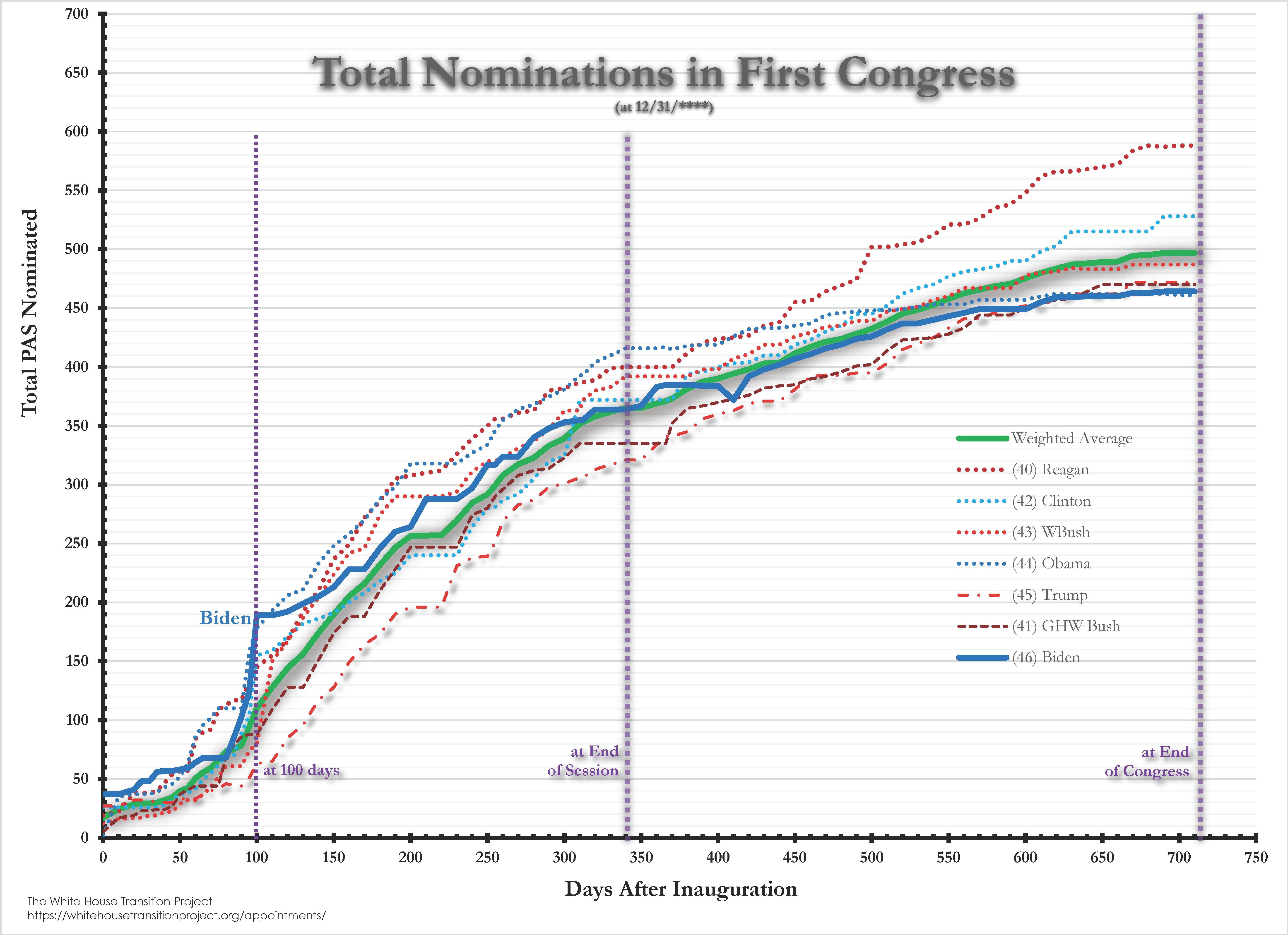 Naming the Administration – Tracking Below the Average.
After dropping below the average in 2022, the Biden White House has remained their, tracking his predecessor’s performance in nominating people to fill administration positions. The last president with a sitting Senate majority — President Trump — ended up at Congress end slightly ahead of the Biden performance on nominating candidates for executive leadership positions.
Back to the top.
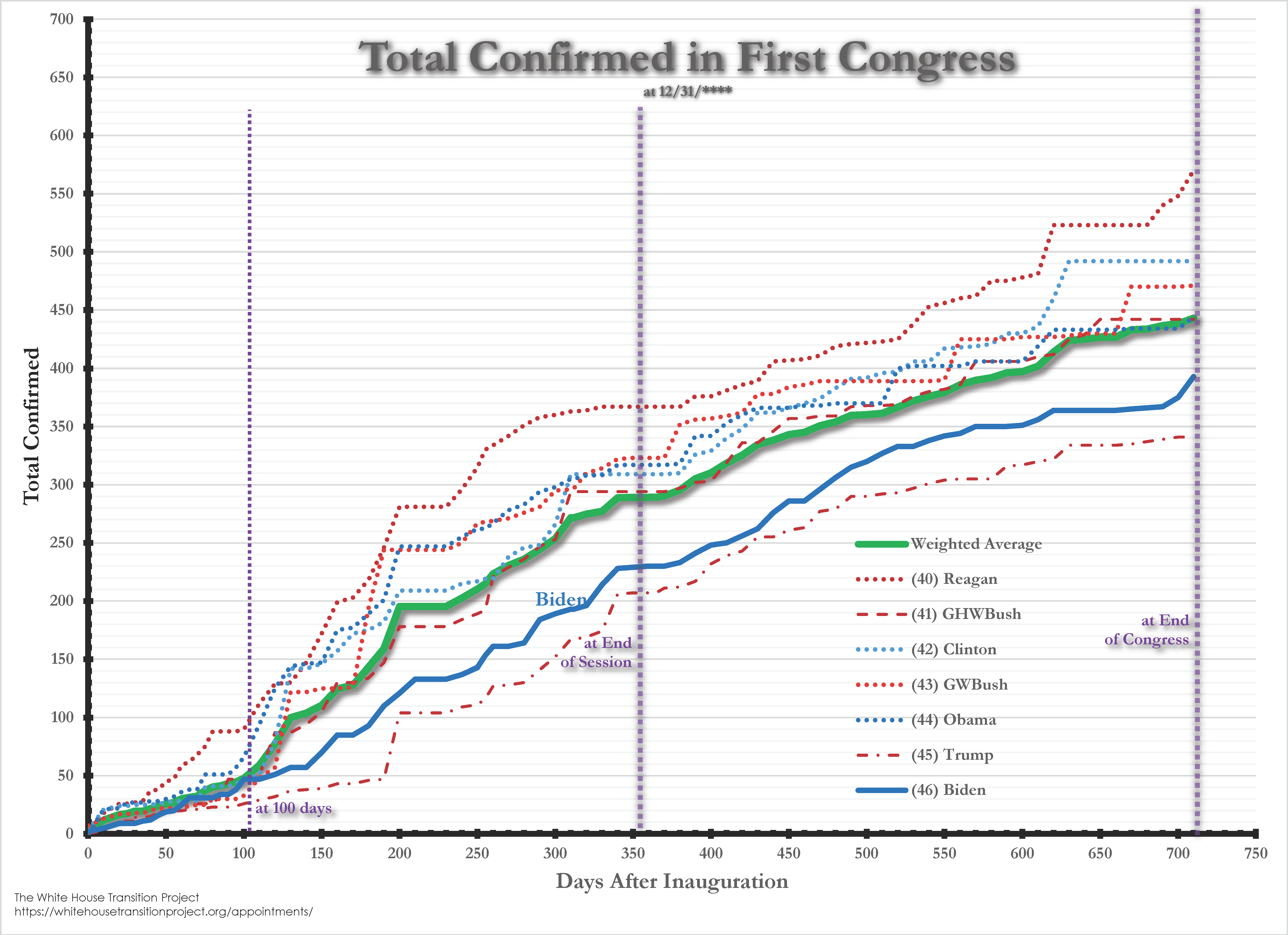 Confirming nominees – The Senate still performs poorly.
Since the beginning of the modern appointments system (beginning with President Reagan’s tenure), few Senate majorities have had a slower confirmation process. The lack of Senate work on Biden nominations has led inevitably to an almost record setting, bad performance. At the end of Congress, the Biden confirmations remain well below average.
Back to the top.
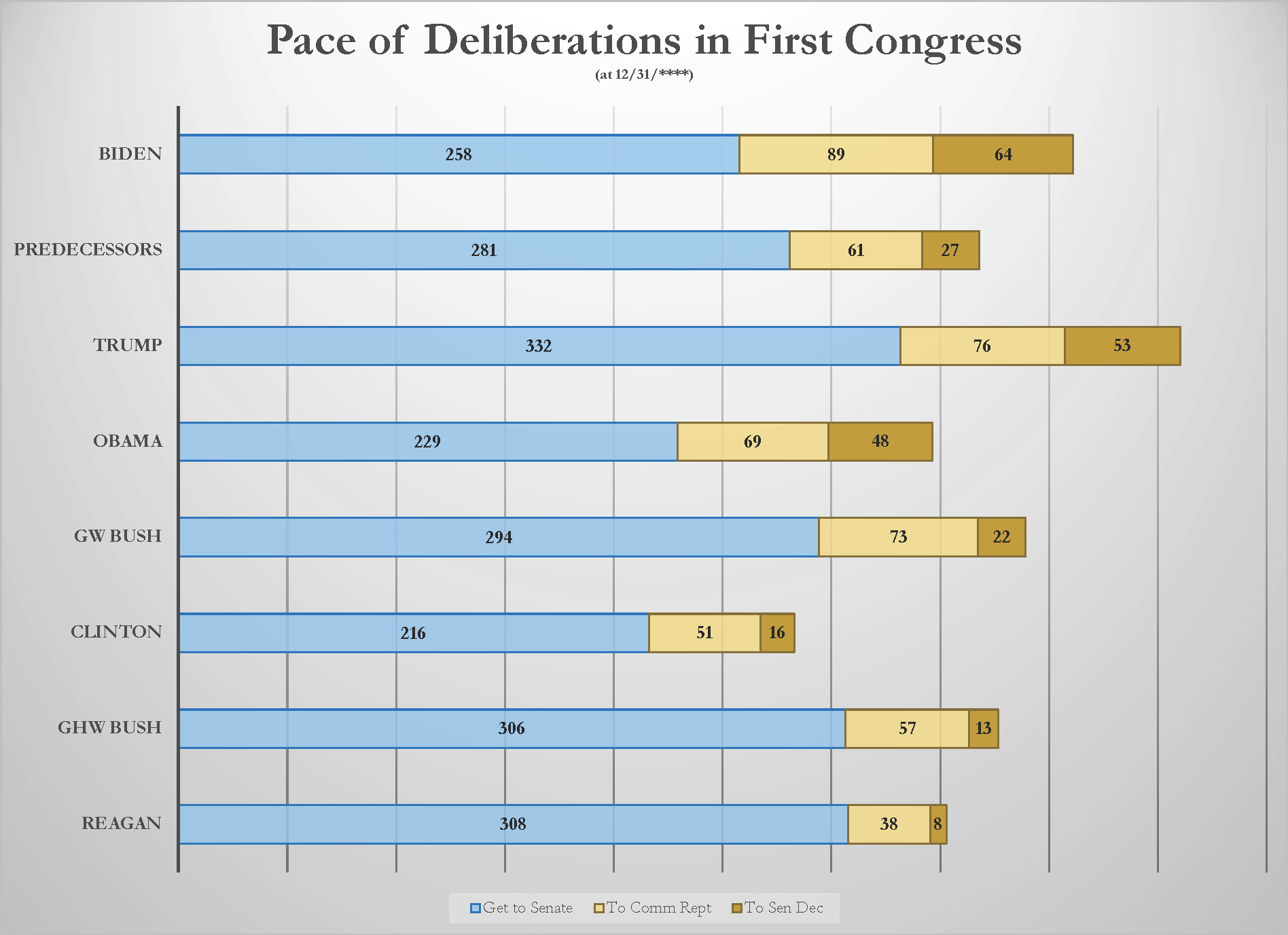 The Pace of Deliberations – The Senate Sets Records.
It ended in a bad way. Like all previous administrations, the greatest proportion of the time associated with getting a government position filled occurs in the Executive. The Biden White House tracked slightly better than the average, taking less time to nominate positions (258 days) than the average for the past six presidencies (281 days), the pace of Senate ended up at an unheard of slothfulness at 153 days, exceeding even the Trump/McConnell Senate majority’s poor performance (129). For Biden, the Senate floor deliberations (at 64 days) took more than twice the average for the previous six presidencies (at 27 days). The pattern for committee deliberations, typically less partisan, have lengthened as well (now at 89 days) remains 30% longer than the average for previous Senates (61 days).
Back to the top.
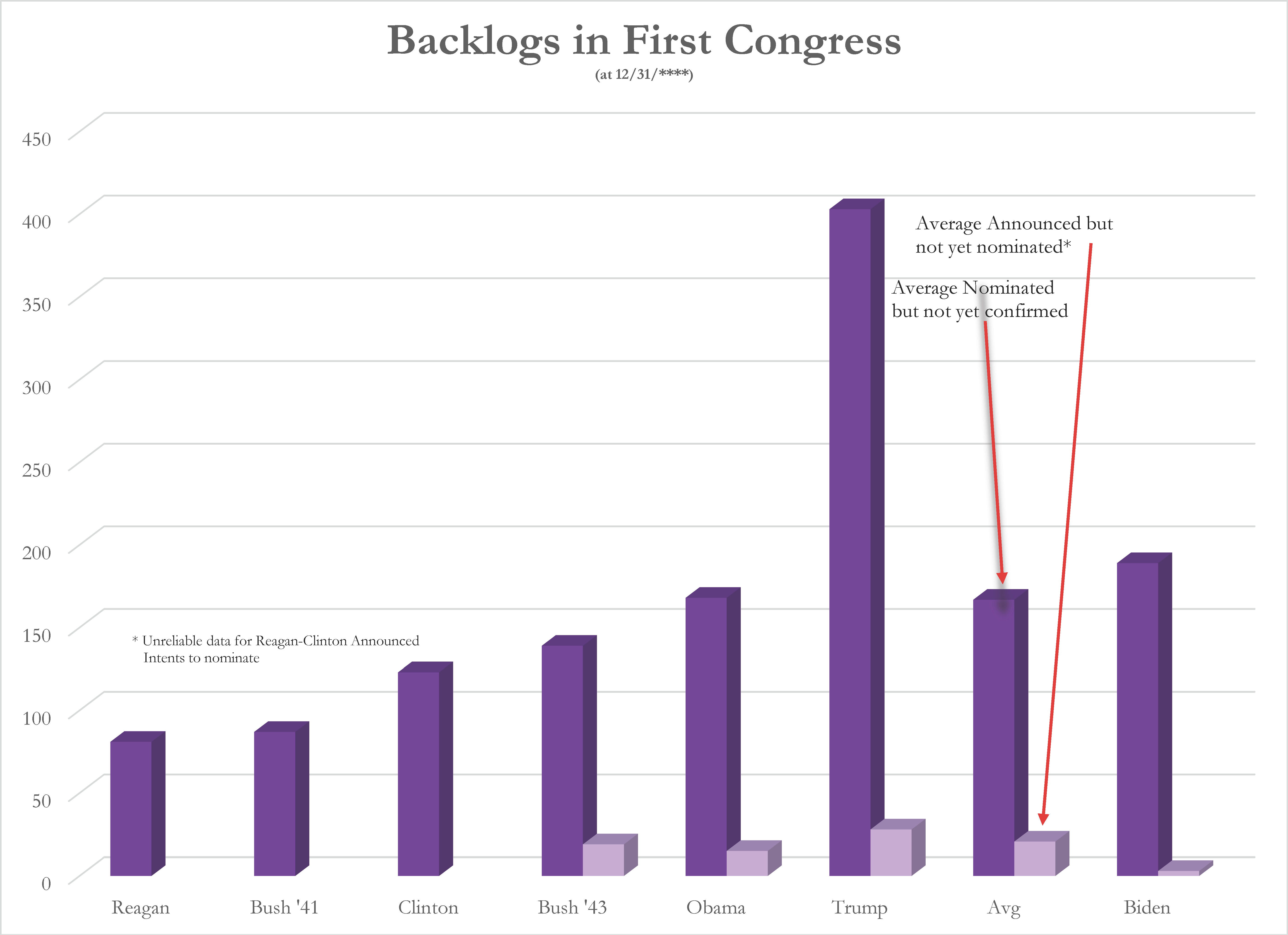 The Backlog – While the White House depleted its bench of announced nominations, the Senate ended with plenty of nominations left in its tank to consider.
In the Executive, backlogs happen when vetting announced nominees builds up a number of nominees not yet sent to the Senate. In the Senate, its backlogs happen when the Senate has more nominations to deal with than time. The current Democratic Senate has a record setting number of unconfirmed Biden nominations waiting in the wings (around 20% greater than the average). The Executive, on the other hand, has begun to build back its own backlog of announced nominees, but curiously, this backlog remains around half the average. Overall, the search for potential nominees continues to seem exceptionally slow.
Back to the top.
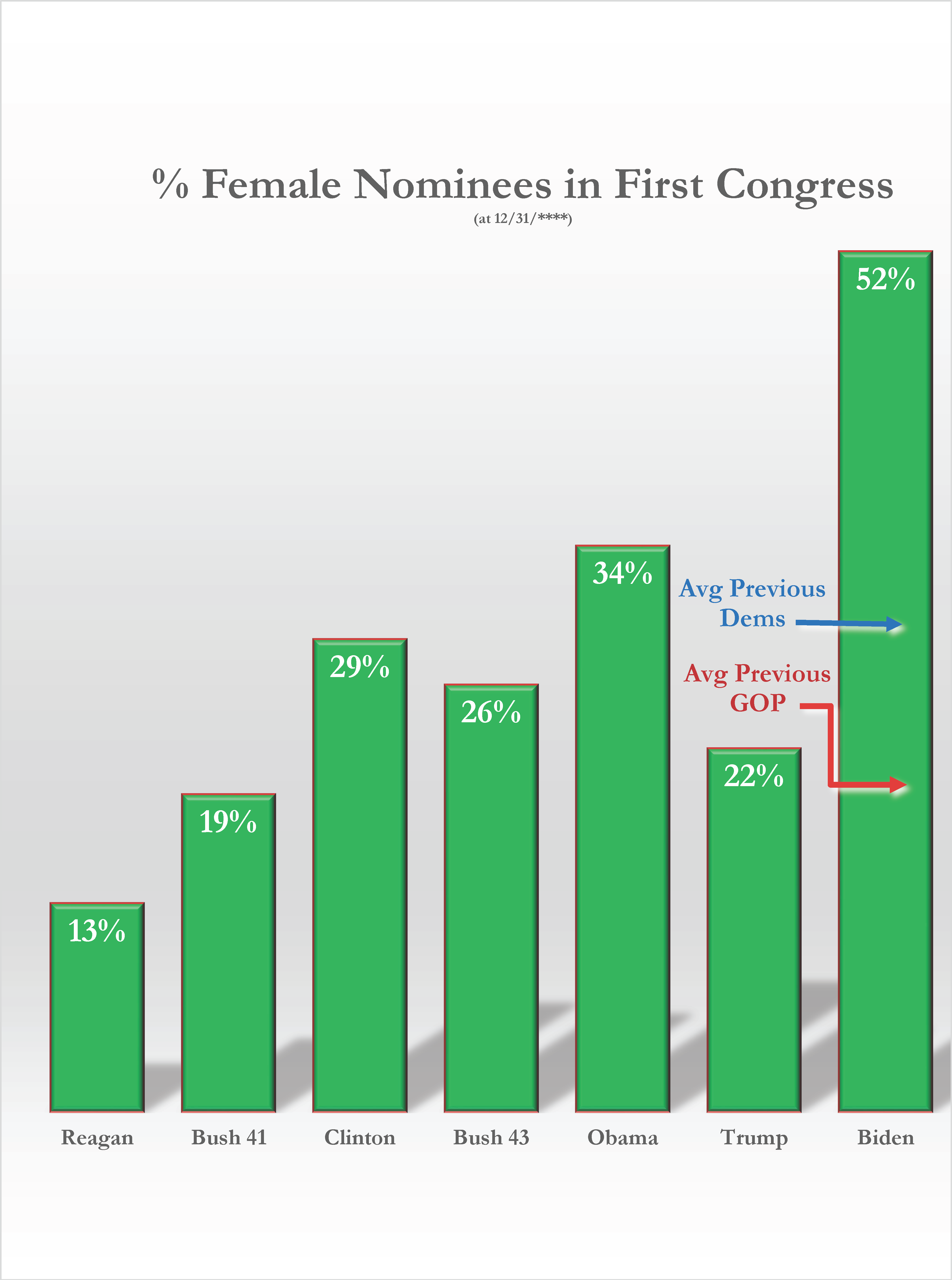 The Gender Rate – Still the Bright Spot.
On gender, the Biden record doubled the average of his predecessors; the new administration almost doubled the rate of even the average for Democratic predecessors. The administration’s nominees almost tripled the gender rate for GOP predecessors. While the cabinet is more diverse than any other, the new administration’s commitment to gender representation throughout the government stands out as an especially significant pattern. New numbers on White House staffing also suggest this same pattern on gender.
Back to the top.
Details of a Peaceful Transition
Back to the top.
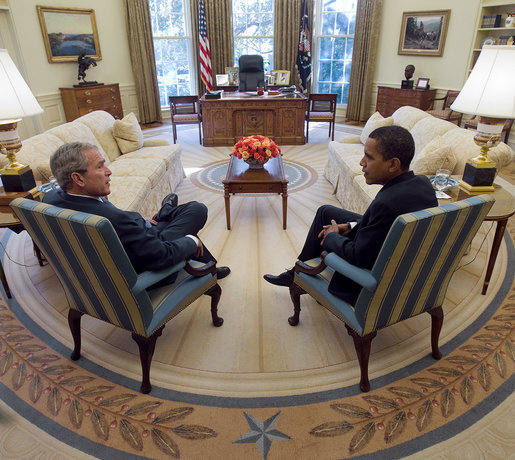
Congressional Testimony on Presidential Transitions
Since 1964, Congress and the President recognized then and continue to acknowledge the importance of an effective transition to a good start for a new President and his team. Having a well-organized operation developed early in the election year benefits a President. Organizing early with an experienced and knowledgeable staff, an incoming President can seize the political momentum and establish his brand of leadership at a time when the public is paying attention. See the complete testimony of WHTP Director Martha Joynt Kumar by clicking here. To view the actual testimony and committee hearing, click here.
Presidential Activities During the 100 Days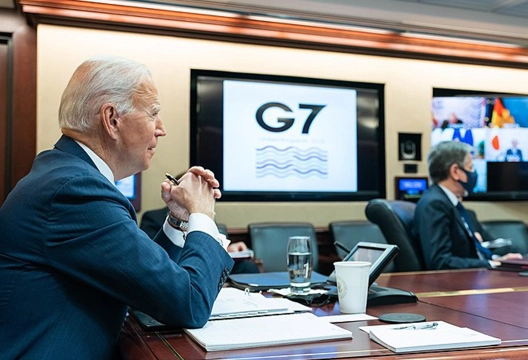 On day 1, new presidents step onto the thin ice of history, alone. What do they do all day, who do they see, and what choices affect both? A new report from WHTP answers these questions. It summarizes the distribution of time dedicated to responsibilities, what do presidents trade-off to increase their engagement in communications, and with lots of “senior advisors” who gets cut out of the room. For a copy, click here.
The Potential For Presidential Leadership
The challenge of a new transition inevitably involves how to lead. Now, more than ever, a new president will face that challenge. In an essay on how opportunity and persuasion shape the potential for leadership, renown presidential scholar George Edwards suggests “Staying private is likely to contribute to reducing gridlock, incivility, and public cynicism and deserves a more prominent role in the president’s strategic arsenal.” For a copy, click here.
WHTP’s Public Information Events
(as of 04/09/2021) No events currently planned.
Technical Aspects of Peaceful Transitions
The New Government Stands Up
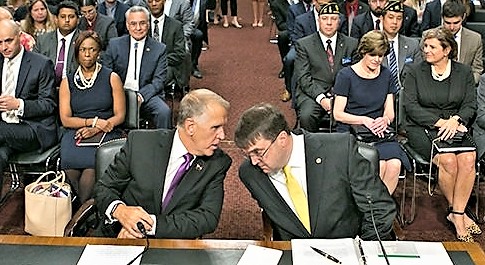
Using the Senate’s “Nuclear Option” slowed confirmations, …again
A new WHTP study analyzes deployments of the “nuclear option” to limit the filibuster, along with other Senate changes affecting deliberations on nominations (including limits on “blue slips”). Senate leaders of both parties intended these changes to promote faster consideration of the president’s judicial nominees. That hasn’t happen. Here’s why, what did happen, and how to strengthen the appointments process before the next time. The highlighted changes would actually reduce partisanship.
Back to the top.
Appointments Strategies
WHTP’s Research Summary on Appointment Politics outlines in memo form what research tells us about how to get ready for and then improve the appointments process, including how to limit the impact of growing partisanship.
Back to the top.
Presidents and the Press
 Biden in Comparative Perspective
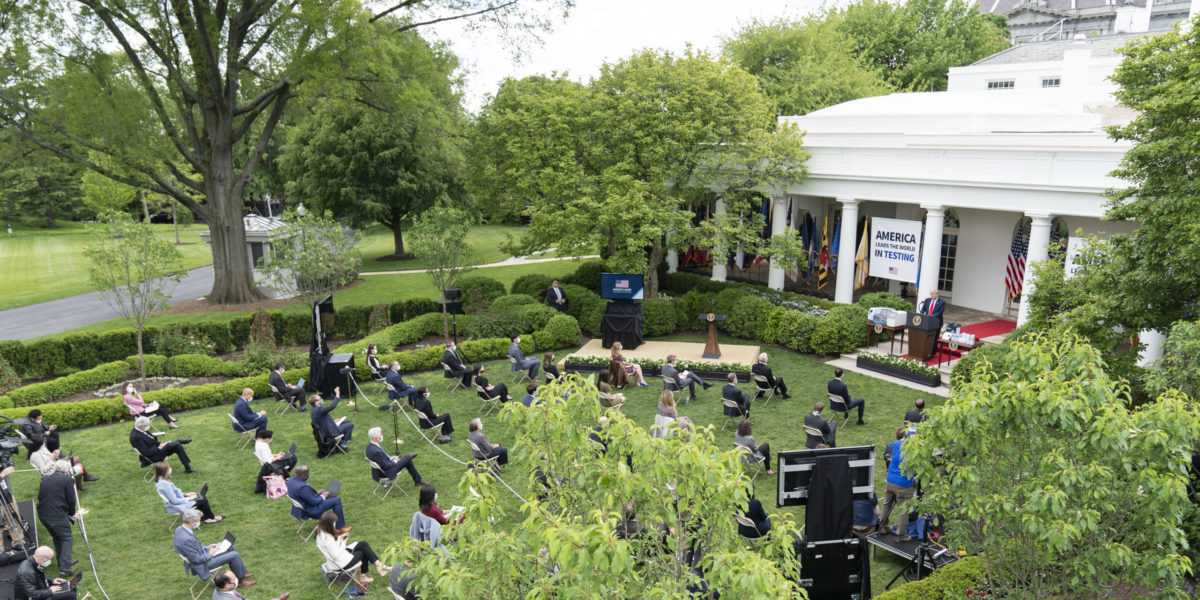
Using her unique data on press interactions, WHTP’s Martha Joynt Kumar compares President Joe Biden to his six predecessors showing how each used the communications strategies that brought them to the presidency. In that way, President Biden mirrors his predecessors. But in other ways, those six predecessors had more in common with each other, e.g., Biden answers more frequently, but he takes fewer questions than the average. See this analysis by clicking here.
Back to the top.
US Presidency Operations Research
Emerging Democracy Transitions |
US Constitutional Transitions |
WHTP’s Basic Transition Services
Since 1997, the White House Transition Project has interviewed a wide range of Assistants to the President about the best ways to carry out the president’s transition to governing and manage their responsibilities in governing. WHTP scholars who specialize in the various operations of a White House, use these interviews to provide a guide for the new presidential team.
Original Interview Foundations for Office Briefs
In addition to these basic resources for US Presidential Transitions, WHTP maintains a collection of its basic interview, through our long-standing partner, the US National Archives. For a sample of these interviews currently in the public domain go here.
Essays on Running Transitions
To adjust critical attitudes about presidential transitions, WHTP maintains a collection essays on how transitions work and how others have learned the lessons about how to prepare. See the drop down menu under the banner for general essays on transitions.
WHTP’s Original Research
To supplement our basic transition resources, WHTP maintains robust research agendas on topics of interest to the US Presidential transition and to normal White House operations. Some of these studies result from requests originating with previous White House staffs as they try to improve their governing operations. This section previews some of these studies.
Current WHTP Studies On Presidential-Press Relations
In one of our periodic reviews, Martha Joynt Kumar reviews presidential interchanges with the press over the last six presidencies and as of 30 months into their administrations. Read the report: Six Presidents Interchange’s with Reporters at 30 Months – Kumar. Some of the highlights:
- President Trump answers 50% more questions from the press than the average for the last five presidents.
- Presidents have expanded their press relations into forums they believe are their strong suit.
- While most presidents aim their communications to the average citizen, President Trump aims at his supporters alone.
Back to the top.
Current WHTP Studies on Presidential Work Routines
The use of time represents the president’s most valuable asset. A commitment to one responsibility necessarily precludes commitment to another. And as a president faces changed circumstances, changing commitments creates trade-offs between responsibilities. Using the daily minute by minute logs of presidents, WHTP builds a picture of typical presidential commitment and trade-offs. These studies focus on two topics: the transition period through to the 100th day and crisis management. See for example, Presidential Work in the First 100 Days.
Back to the top.
WHTP Reports on Presidential Appointments
The pace of appointments in both the executive and in the Senate accounts for the ability of any administration to carry out its responsibilities to the electorate and to the nation. Appointments fulfill the president’s agenda set by the election and they also stand up the critical functions of the national government, from transportation to space to global economics and national defense.
Our personnel trackers report on deliberations across the entire appointments process:
- WH Identifies: The White House search for appropriate nominees from available candidates. Typically, this stage culminates in an announcement of the “president’s intent to nominate” a candidate.
- Executive Review: The executive branch conducts vetting of the candidate. This stage culminates in sending credentials to the Senate as an official nominee.
- Sen Comm Vetting: The first of two Senate stages, a committee investigates the nominee, culminating in a committee report and recommendation to the full Senate.
- Sen Floor Process: The final disposition of a nominee in the Senate, culminating in floor vote to confirm the nominee.
WHTP’s Personnel Trackers follow the pace of appointments in the new administration by comparison with administration’s dating to the rise of the modern appointments system during President Reagan’s first year. The trackers cover two groups: a common set of 220 “critical” appointments and a larger, more diverse group of 980 presidential nominations.
WHTP reports these results in 10 day increments during the first two years. See our Appointments page for more detailed information.
Back to the top.